Converse
Stream replies and steer, queue, or stop an active run.
Build faster. Think bigger.
Pipkin brings the Pi coding agent into a focused Rust/GPUI desktop client. Stream answers, follow tool calls, and inspect file changes beside the conversation.
Alpha on Arch / Omarchy Wayland · No published release yet

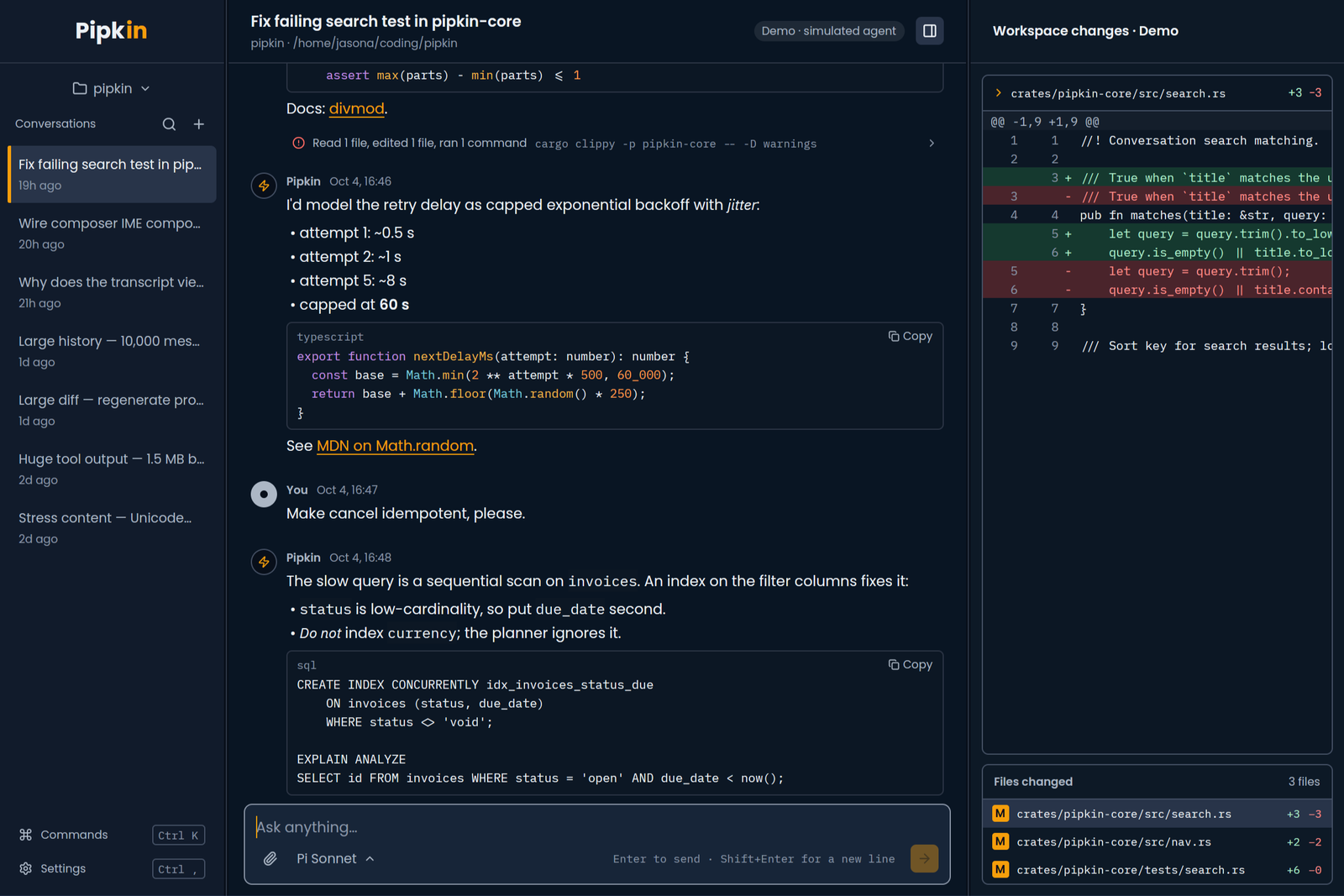
Scroll to inspect the full desktop screenshot
Stream replies and steer, queue, or stop an active run.
Expand tool output and review diffs beside the conversation.
Return to saved drafts, conversations, and search.
Readable tool cards, file changes, and both dark and light themes. These are screenshots of Pipkin’s built-in simulated demo, not a recording of a real model run.
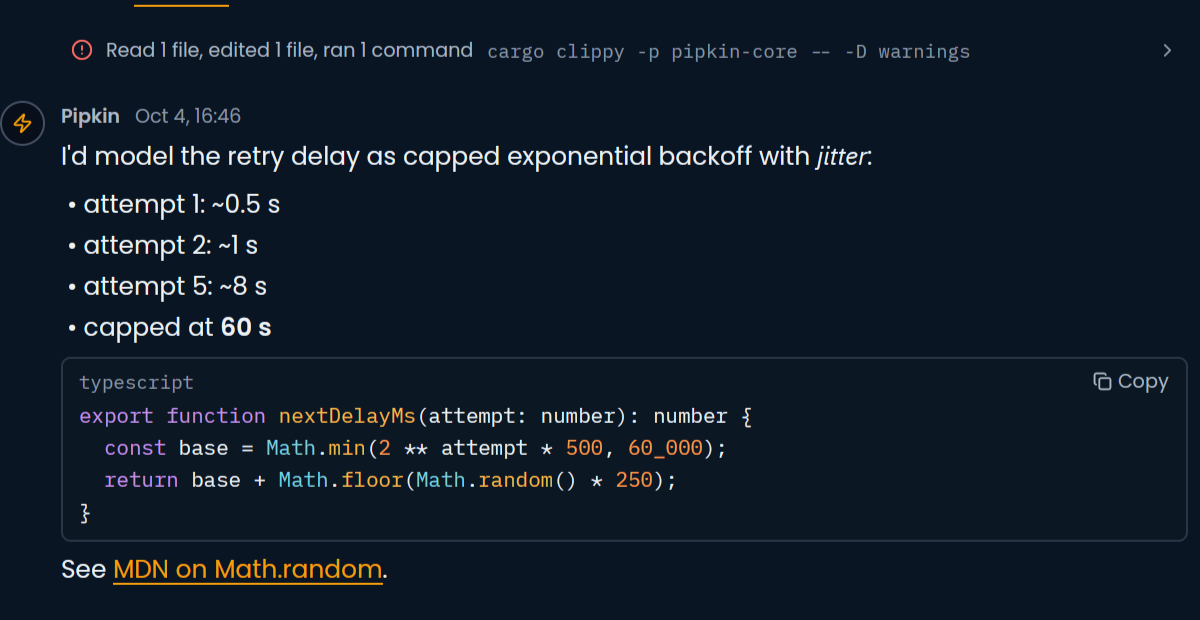
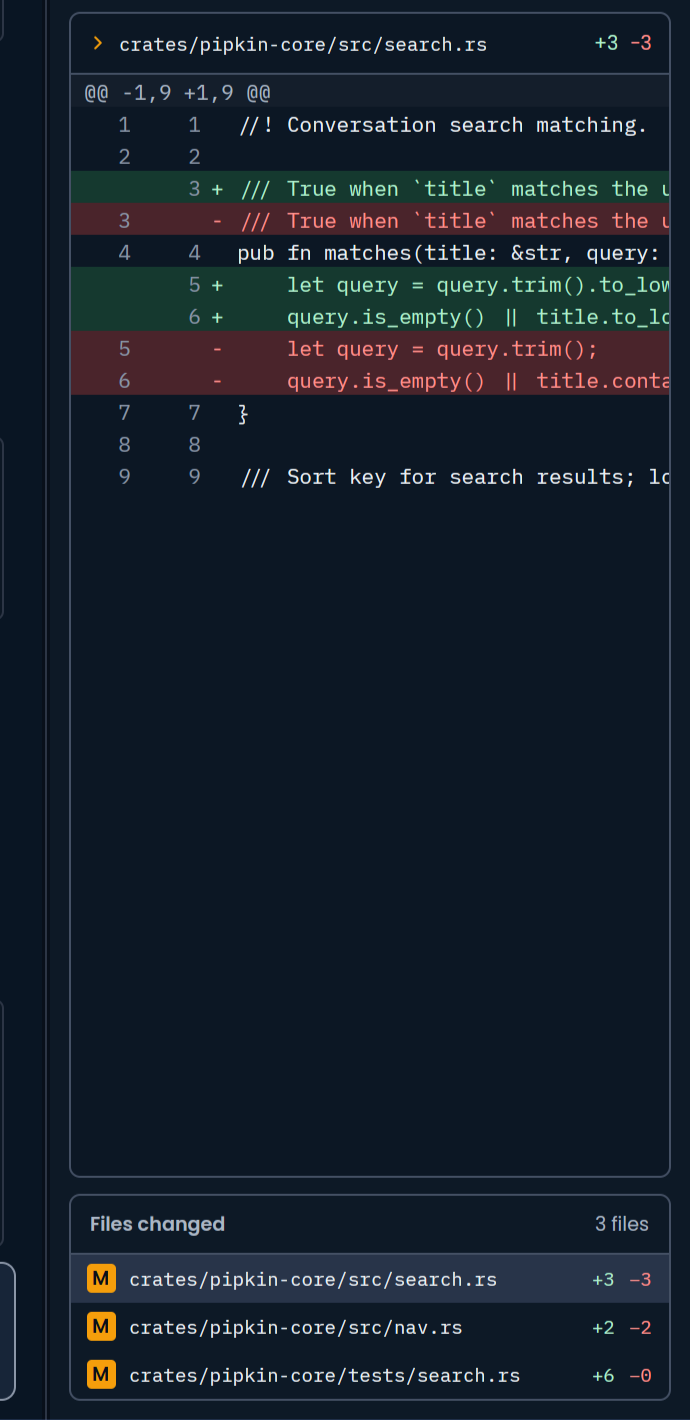
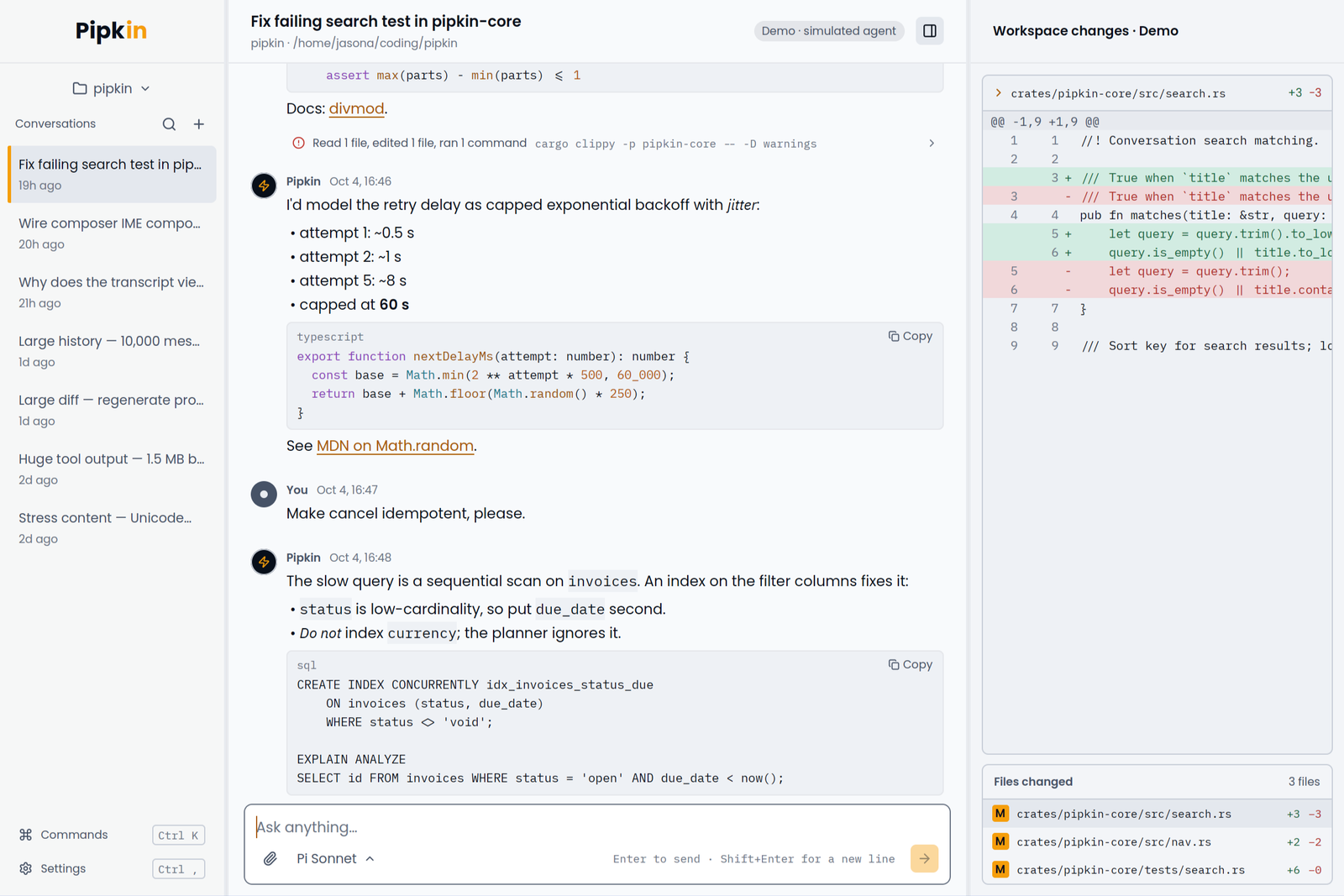
Pi runs the agent and owns its sessions. Pipkin is the native client: it shows streaming answers, tool activity, and diffs, while keeping drafts and saved copies on your machine.
Built workflows; broader native qualification is still in progress.
Pipkin runs with a real Pi engine and has a buildable package. It is alpha software: installation on a clean machine, accessibility, scaling, and broader platforms need more checks. Read the full status.
Reviewed · Source revision eaab8ef
| Area | Current status |
|---|---|
| Real-engine workflow | Execution, steering, queueing, and recovery are built and tested against a real engine; real-model use is reported on the author's machine. |
| Local product | History, search, tool output, extension dialogs, and offline saved copies are built. Native accessibility and scaling gates are only partly run. |
| Install and package | Bundled-engine package and diagnostics are built and scratch-prefix checked. Clean-machine install is unverified; no release is published. |
| Platforms | Arch / Omarchy Wayland: alpha. X11 starts under Xwayland only; other Linux environments are unverified. macOS and Windows are not supported. |
What works now, and what still needs to be checked?
No. Pi is the coding agent. Pipkin is a native desktop client for Pi’s conversations, tool activity, and file changes.
You can build it from source or prepare an Arch package locally. There is no published release or update channel yet. Start with the alpha setup guide and review the remaining qualification gates before relying on it.
Arch / Omarchy on Hyprland Wayland is the alpha target. The X11 build has started under Xwayland, not a pure X11 session. Other Linux desktops are unverified; macOS and Windows are unsupported.
A Wayland or X11 desktop, a Vulkan-capable GPU driver, and Node.js 22.19 or newer. Installed packages bundle Pi’s engine; source builds can use a compatible Pi checkout. See setup details.
The app and engine run locally. Model-provider requests depend on your Pi configuration; tools run with the engine’s permissions and are not sandboxed by Pipkin.
No. It is a focused agent workspace with actions to open files in your editor or a terminal in your project.
See the real implementation, current status, and open work in the public repository. There is no published download yet.